Images | primeminister.kz
Dialogue has always been - and remains - the hard currency of politics. The ability of countries to listen to one another and jointly develop responses to the challenges of the times directly determines the stability of the international system, especially during periods of change or crisis. In today’s world, this has become particularly evident: the decline in trust between states is a consequence of dialogue itself becoming an increasingly scarce "resource."
At the same time, modern politics offers examples of countries coming together through dialogue and creating strong multilateral structures aimed at strengthening peace and trust while unlocking the potential for good-neighbourliness and cooperation. The Shanghai Cooperation Organization (SCO) is undoubtedly one such organization.
Established 25 years ago - on June 15, 2001 - the SCO has grown into one of the world’s largest regional multilateral organizations.
Over the past quarter century, the SCO has forged a unique history of building trust, finding compromises, and strengthening partnerships across the vast Eurasian space. The Organization has travelled a long, complex, and dynamic path, demonstrating not only its viability but also its effectiveness and enduring relevance.
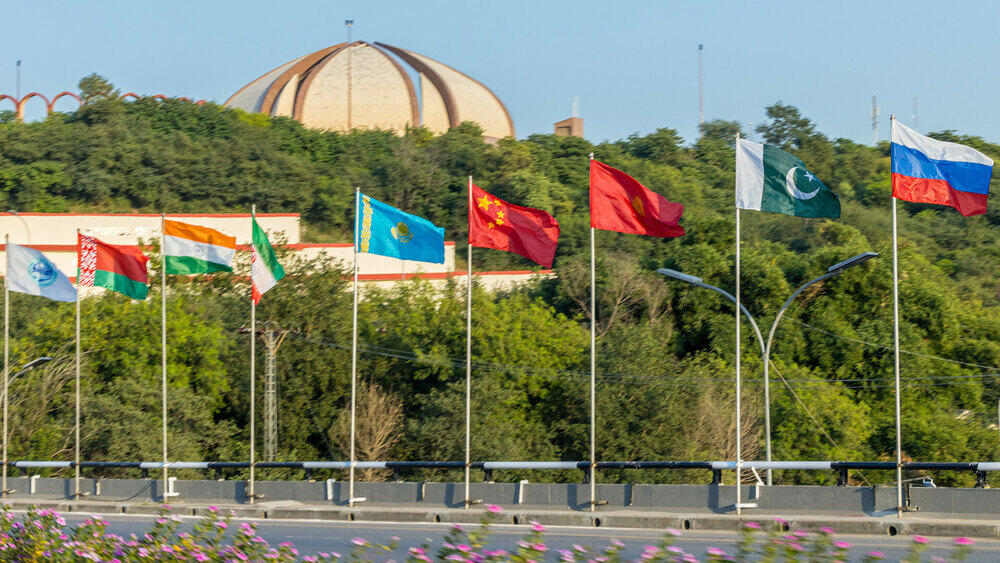
The origins of the SCO can be traced to the "Shanghai Five," a dialogue platform established in 1996 by Kazakhstan, China, Kyrgyzstan, Russia, and Tajikistan. Sharing the group’s fundamental objectives, Uzbekistan joined in 2001, transforming the "Five" into the Shanghai Cooperation Organization and establishing a strong Central Asian core within it. Today, the SCO comprises ten member states. In addition to those already mentioned, they include India, Pakistan, Iran, and Belarus. Collectively, the SCO member states account for more than 60% of the Eurasian landmass, nearly half of the world’s population, and a significant share of global GDP.
Throughout these years, the SCO has consistently strengthened its standing among influential international and regional institutions, serving as an effective mechanism for promoting security, stability, and sustainable development. Today, we are witnessing the SCO’s growing global role.
Its greatest asset remains its constructive and pragmatic approach to cooperation, founded on the universal principles of equality and mutual benefit, without the dominance of any single ideology. This approach has become known as the "Shanghai Spirit," reflecting the distinctive strategy adopted by its member states. Over time, this model has proven the resilience, effectiveness, and enduring value of the multilateral mechanisms developed within the SCO framework.
The outcomes of recent SCO summits have demonstrated the enormous scale of the tasks undertaken and the ambitions set, highlighting the Organization’s ability to make swift and effective decisions on pressing regional issues in the fields of politics, security, trade, the economy, and humanitarian cooperation.
One of the most recent examples is the adoption in 2024, at Kazakhstan’s initiative, of the SCO Initiative "On World Unity for a Just Peace, Harmony and Development." This unprecedented and comprehensive document sets out principles for strengthening confidence-building measures and maintaining stability and security amid today’s global challenges. It was subsequently presented to the UN General Assembly as an official document.
The security dimension remains one of the key pillars of the SCO agenda, and the Organization has accumulated significant experience in the joint fight against terrorism, separatism, and extremism. A central role in these efforts is played by the Regional Anti-Terrorist Structure (RATS), established within the SCO framework. The effectiveness of these measures is reflected in tangible and measurable results in dismantling terrorist infrastructure. A system for the rapid exchange of information has been established, and regular counterterrorism exercises are conducted. According to experts, thanks to this coordinated approach, the number of terrorist attacks within the SCO’s area of responsibility has steadily declined.
In our view, one of the Organization’s principal achievements has also been the creation of a Eurasian space characterised by strong connectivity in transport, energy, investment, and technology. It has developed a flexible model of economic partnership based on respect for sovereignty, pragmatism, and the pursuit of mutual benefit.
One of the concrete steps taken to strengthen practical cooperation was the agreement among the member states to establish the SCO Development Bank. Negotiations on this project are currently progressing actively, which is encouraging, as I am confident that the SCO Development Bank could, in the future, become a key financial institution for implementing a wide range of economic and humanitarian projects across the Organization.
Equally important is the expansion of cultural and humanitarian cooperation among the SCO member states, which is becoming increasingly substantive. A number of flagship projects have already been launched, including the SCO University, the "Education without Borders" initiative, "Spiritual Shrines," the SCO Tourism and Cultural Capitals programme, the Youth Forum, and many other initiatives. These projects not only amplify the voice of the SCO but also serve as bridges between peoples, thereby strengthening mutual understanding and trust among its member states.
Kazakhstan is a steadfast supporter of the principles of the SCO and an advocate of the Organization’s further institutional development and the strengthening of its international standing.
It is worth recalling that it was during Kazakhstan’s chairmanship in 2017 that India and Pakistan were admitted to the Organization, marking the first phase of the SCO’s expansion. At the 2024 Astana Summit, meanwhile, the Shanghai Cooperation Organization convened for the first time in its expanded ten-member format, with the Republic of Belarus participating for the first time as a full member of the SCO.
At Kazakhstan’s initiative, and with the support of the other member states, a number of highly significant documents were adopted, including the SCO Development Strategy to 2035, the Food Security Programme, the Agreement on Cooperation and Interaction among Member States on Border Issues, the Programme on Combating Terrorism, Separatism, and Extremism, and several others.
One of the key priorities of Kazakhstan’s policy within the SCO framework is to improve the Organization’s effectiveness and enhance its efficiency in the context of a rapidly evolving international environment.
Astana consistently advocates for the modernization of the SCO, the adaptation of its institutions to contemporary challenges, and the strengthening of the practical dimension of cooperation.
In this context, Kazakhstan’s chairmanship of the SCO in 2023-2024 assumed particular significance. During the 2024 Astana Summit, a process of institutional reform was launched with the aim of strengthening the Organization’s resilience, improving the efficiency of its decision-making, and expanding cooperation among its member states.
President of Kazakhstan Kassym-Jomart Tokayev emphasized that, in a period of global instability, the SCO must adapt in a timely manner to new geopolitical and economic realities. To this end, Kazakhstan proposed a comprehensive review of the Organization’s activities, including its decision-making mechanisms, the implementation of joint projects, and the coordination of the work of its specialized bodies.
The reform process proposed by Kazakhstan is currently under active consideration by the member states. The primary objective of this initiative is to enhance the practical effectiveness of the Organization and strengthen its role as one of the key centres of international cooperation across the Eurasian space.
Kazakhstan also advocates strengthening the economic dimension of the Organization. This aspect of cooperation is often criticised for failing to realise the SCO’s full potential, and it must be acknowledged that such criticism has some basis.
In terms of the combined GDP of its member states, the SCO is one of the world’s largest regional groupings. According to various estimates, the combined foreign trade turnover of the SCO member states amounts to approximately US$1 trillion. The Organization includes some of the world’s largest producers and consumers of energy, while many of the world’s key overland transport routes pass through its territory.
The SCO’s economic potential gives it every opportunity to become one of the leading centres of economic cooperation and connectivity. Yet this potential remains far from fully realised. With this in mind, Astana proposes intensifying joint investment projects, expanding the use of national currencies in mutual settlements, and developing international transport corridors that pass through the territories of SCO member states.
As a middle power with a high level of digital readiness and substantial experience in the services sector, Kazakhstan is promoting within the SCO an agenda of digital transformation that includes the adoption of innovation and the creation of new platforms for cooperation in e-commerce, cybersecurity, and artificial intelligence.
For the SCO member states, environmental issues are directly linked to economic stability, food security, and the quality of life of their populations.
The challenges of climate change, desertification, dwindling water resources, and environmental pollution are particularly acute across the region. Central Asia is among the world’s most vulnerable regions in terms of water security, giving the SCO’s environmental agenda strategic importance.
In this context, I would like to highlight the initiative put forward by the President of the Republic of Kazakhstan, Kassym-Jomart Tokayev, to establish a Centre for the Analysis of Water Issues of the SCO Member States.
The Centre will focus on consolidating and sharing technologies and best practices in efficient and sustainable water management, while also promoting the development and implementation of joint innovative solutions in the water sector.
Overall, it is clear that the SCO has evolved into a comprehensive international organization in which every area of cooperation develops harmoniously while preserving the "Shanghai Spirit" and ensuring the active participation of all member states.
It is important to emphasize that, despite its extensive work in the field of security, the SCO is neither a military bloc nor a closed alliance directed against third countries. Rather, it is an open platform for cooperation.
Kazakhstan has consistently advocated for dialogue on the basis of equality, consensus-based decision-making, and the rejection of confrontational approaches. Only by remaining faithful to the goals and principles of the SCO Charter can the Organization ensure its balanced development while fostering an open and trusting multilateral dialogue.
Over the past 25 years, the SCO has repeatedly demonstrated its ability to bring together states with different political traditions, economic models, and cultural backgrounds in pursuit of common goals and a shared responsibility for the future.
Behind this anniversary lies a quarter century of hard work, diplomatic skill, political wisdom, and a genuine commitment by its member states to strengthening trust and mutual understanding.
Today, the SCO is entering a new stage of its development - a period in which the stability of the international order and the quality of life of millions of people will increasingly depend on the effectiveness of cooperation.
I am deeply convinced that the Organization’s accumulated experience, its unique potential for cooperation, and its steadfast commitment to the enduring principles of the Shanghai Spirit will enable it to remain one of the world’s leading platforms for constructive international cooperation.
As President Kassym-Jomart Tokayev has noted: "Our peoples place great hopes in the SCO. They expect that fruitful cooperation within the Organization, based on compromise and due consideration of mutual interests, will enable us to overcome today’s trials and tomorrow’s challenges with dignity, while improving the well-being of our citizens."
Author: Ermek Kosherbayev, Minister of Foreign Affairs of the Republic of Kazakhstan

